
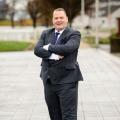


Acclaimed Scottish screenwriter, Paul Laverty, was charged last week with “supporting a proscribed organisation” following a protest outside St Leonards police station in Edinburgh.
I spoke with Paul on The Ordinary Elite podcast along with my Glasgow lawyer colleagues John McGovern and Rachel Moon.
We couldn’t discuss the charges for legal reasons. What we were able to do was talk about the wider concern that peaceful protests are now being mixed up and conflated with anti-terrorism laws in the UK.
Paul has spent most of his professional career exposing injustice and hypocrisy with his film-making collaborations with director Ken Loach.

READ MORE: Should tribunals be entitled to hear all school transition appeals?
READ MORE: Mike Dailly: What to do if you have a car finance mis-selling claim
Whether the grievous impact of the Contra War in Nicaragua in Carla’s Song or the inhumanities of our social security system in I, Daniel Blake.
It’s important that people can speak truth to power and tell our politicians what we think.
Is the UK complicit and colluding in the current genocide and famine in the Gaza strip?
The UK licenses over 300 companies that supply arms to Israel – including providing parts for the F-35 fighter jets used to bomb Gaza.
Since December 2023, our Royal Air Force has undertaken surveillance flights over Gaza for Israel using the Shadow R1 aircraft based in Cyprus.
Article 10 of the European Convention on Human Rights safeguards the right to freedom of expression.
This right includes the freedom to hold opinions and to receive and impart information and ideas without interference by public authority and regardless of frontiers.
Article 11 provides that everyone has the right to freedom of peaceful assembly and to freedom of association with others.
These rights are part of our domestic law through the 1998 Human Rights Act.

READ MORE: Mike Dailly: UK must recognise Palestine as a state
The 2000 Terrorism Act enables the Home Secretary to proscribe organisations believed to be engaged in terrorist activities in the UK
The Act creates a number of statutory offences, punishable by up to 14 years in prison. Last month a statutory order proscribed three new groups including “Palestine Action”.
There are two offences which seem to be causing particular difficulties in relation to peaceful protests against genocide in Gaza.
Section 12(1A) makes it a criminal offence to express an opinion or belief that is supportive of a proscribed organisation, reckless as to whether a person to whom the expression is directed will be encouraged to support a proscribed organisation.
Section 13 makes it a criminal offence to wear clothing or carry or display articles in public in such a way or in such circumstances as to arouse reasonable suspicion that the individual is a member or supporter of a proscribed organisation.
In addition to establishing sufficient evidence of criminality, a person will generally not be prosecuted unless it’s in the public interest to do so; and prosecution is a proportionate response to the criminal behaviour in question.
It cannot be right that an increasing number of people are being arrested and threatened with prosecution in Scotland for peaceful protests against deaths and famine in Gaza.
I’m perplexed how the Terrorism Act is being rolled out so quickly and easily at peaceful protests.
An obvious solution is for the Scottish Government to provide a statutory code of practice on arrests at public protests for Police Scotland and the Crown Office.
That may require law reform, but there’s no reason why such a solution could not be expedited in the interests of justice.


Share