





When he was 11 years old, David Leggat had a letter published on the sports pages of a Glasgow newspaper.
“I got paid a guinea for it, and that was a lot of money back then,” he recalls, smiling.
“And I remember thinking, well, I am never going to be a professional footballer, so I think I will work in newspapers….”

As the Glasgow Times celebrates its 150th anniversary, we caught up with former copy boy turned sports reporter David to hear more about his 60-plus (on and off) years writing for our newspaper, formerly known as the Evening Times.
He was on the scene of the deadly James Watt Street warehouse fire in 1968; covered the Queen’s visit to launch the QE2 in 1967; and was dispatched to fancy city restaurant Rowan’s to tell the editor – out lunching with important people - the breaking news that Robert F Kennedy had been shot.

“It has been a real honour to work for the Evening Times – I am always going to call it that – for so long,” he says. “The job has given me so much, a great grounding in life, and many skills I have used throughout my life.”
David, who grew up in “a tumble-down tenement” Maryhill, started work with then publishers of our titles, Outram and Co, when they were based in The Lighthouse on Mitchell Street.
“My dad was an engineer fitter on the steam locomotives and he could never understand why I couldn’t change a lightbulb,” he says, laughing. “Newspapers were a new industry to our family.”

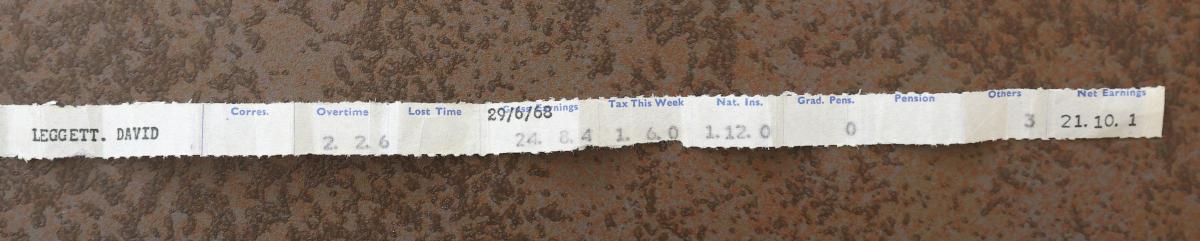
He still has his first byline picture, aged 17, and a wage slip from 1968 for the princely sum of £24, eight shillings and fourpence.
“It was very much a man’s world back then,” he says. “There were only three women in the office – two copytakers, and Meg Munro, the columnist who wrote the ‘women’s’ pages. Her real name was Sally Russell.”
He adds: “The editor was Sam McKinlay, an austere man who was a bit like a captain of a ship. He didn’t believe in giving copy boys reporters’ jobs straight away, so I had to build up lots of experience.
“My first byline was on a piece about tourism on Arran.”
Out on jobs with seasoned reporters, David’s main job was to “lock down” a telephone box nearby, so copy could be relayed through to the newsroom.

“You were told to defend that phonebox at all costs,” he says, grimly. “No matter who wanted in, or for what, you had to make sure they didn’t make it.”
Covering the James Watt Street fire, which killed 22 people, was a harrowing affair, he recalls.

“I’d get the scribbled notes from the reporters, and phone them in to the copytaker, and it was terrible to read what was happening,” he says, sadly.
“Afterwards, I was taken in to the Gordon Arms, fed a few halves and sent home, with a ‘see you tomorrow at 8.30am’. Different times.”
David also recalls working with veteran journalists like Gair Henderson, John Quinn and copytaster Joe McKenzie.
“Some of the guys had been in the war – one was in the SOE, Special Operations Executive; another worked in naval intelligence with James Bond author Ian Fleming,” he adds. “They all had a story.”
David moved away from Glasgow for a while, working in Fife and then on Fleet Street, before returning to the city in 1984.
READ NEXT:
-
From medicine to music hall, these Glaswegians are the greatest
-
'Journalism which makes a difference': Glasgow Times receives city honour
He recalls being sent out to cover football matches, from the lower leagues and junior games. “My first was Jordanhill College v Rangers Third,” he laughs.
It sparked a life-long love of sports writing, and Rangers. “They’re my team,” he says, proudly. “I have written four books about previous players and managers, and now write colour pieces on the great names in the game who have, shall we say, made their final transfer.”
David, who is in his late 70s now, smiles. “I still get a buzz out of it,” he says.
“I get the call to say, can you do 1000 words and get it to us in an hour and half? And I finish it, check the time and think - I have still got it. I can still do it, and I love it."


Share