

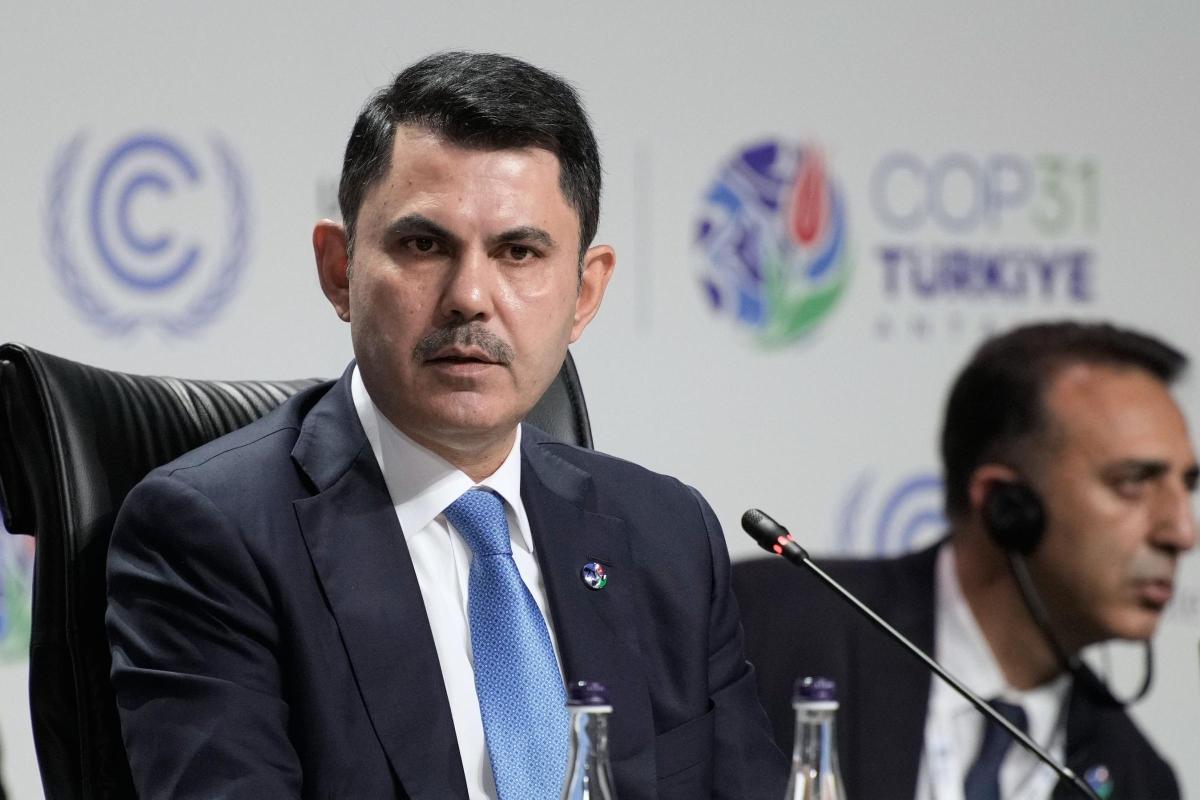

Delegates at United Nations climate talks in Turkey have failed to reach an overarching deal amid disagreements over whether to mention the fossil fuels that cause global warming.
Expectations had already been low heading into the two-week Cop31 negotiations but discussions about explicitly including fossil fuels – the chief cause of global warming – and other issues including money in a deal proved irreconcilable.
Any pact approved at the talks had to be by a near-unanimous consensus.

Several countries, including the 27-nation European Union, said they could not accept the final proposal from the joint Turkish-Australian leadership that did not mention fossil fuels.
A considerably larger number of nations said consensus on something was more important and accepted the decision, often reluctantly. Russia and Saudi Arabia were forces to keep fossil fuels out of the document.
Darragh O’Brien, Ireland’s climate minister who was speaking on behalf of the EU, said: “It’s unconscionable that we would have a climate act that makes no reference to fossil fuels.”
The draft deal from Turkish environment minister Murat Kurum, co-president of Cop31, did include a specific goal on supporting technology that captures carbon pollution and stores it, which is hotly debated and backed by the oil industry.

The proposal was aimed to help industrial polluters, who cannot easily switch to renewables, find a way to capture their carbon dioxide emissions and bury them.
But carbon capture and storage could be used as an excuse to continue investing in fossil fuels, climate experts have warned.
As the proposed deal fell apart in the plenary session, Mr Kurum was absent, leaving it to Elchin Allahverdiyev of Azerbaijan to announce the failure.
Australia’s Chris Bowen, the president of negotiations in the unusual joint leadership, said: “Unfortunately, we were unable to reach agreement on a cover decision. That’s disappointing, very disappointing.”
Rachel Cleetus, of the Union of Concerned Scientists, said: “The failure of this Cop to deliver ambitious, fair, science-based outcomes falls squarely on the shoulders of richer nations, petrostates, and the disgracefully incompetent duo of the Turkish and Australian Cop presidents.”


Share