


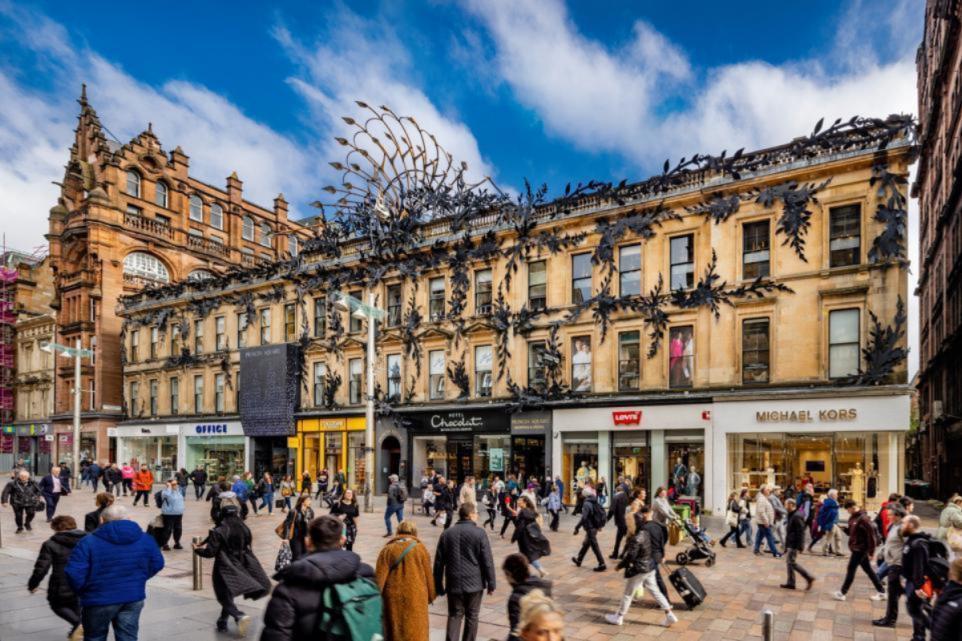
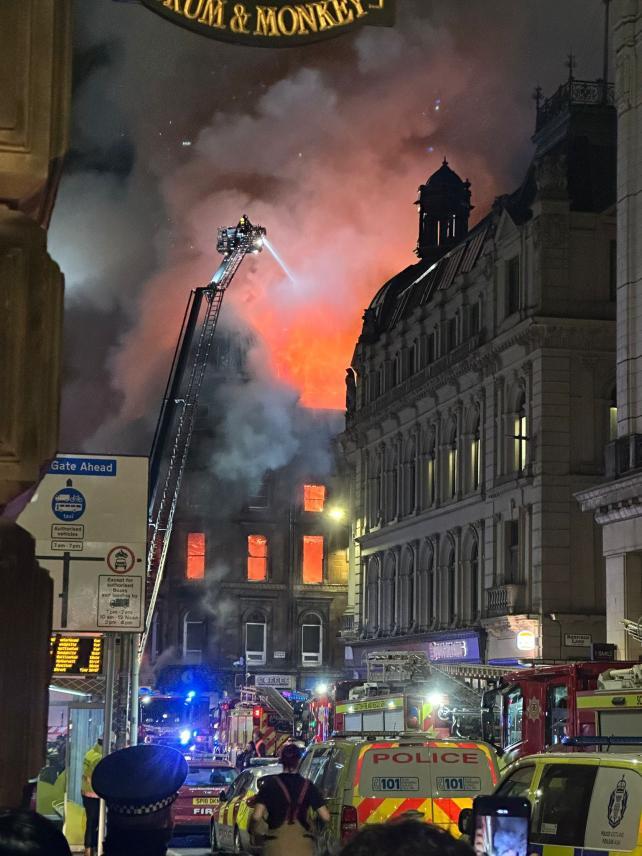

Glasgow’s city centre was dealt a sharp blow last month, as visitor numbers and spending slumped in the aftermath of the devastating Union Street fire.
The major blaze on March 8 forced the closure of Glasgow Central Station and triggered transport disruption.
According to new figures from Glasgow Chamber of Commerce, footfall in March dropped by 11%, while sales fell by 14.2% compared to the same month last year.

READ MORE:
-
LIVE updates as Glasgow Central Low Level FLOODED causing travel chaos
-
Date revealed for when new £2 bus fare cap will start in Glasgow
-
Busy Glasgow Queen Street lines to close this weekend as trains replaced by buses
-
Council reveal when Union Street safety cordon could be removed
Stuart Patrick, chief executive at Glasgow Chamber of Commerce, said: "These figures are encouraging from a recovery perspective, but there is no doubt that the economic impact of the Union Street fire has been significant for a city already facing challenging conditions.
"The broader picture points to the need for continued focus on increasing footfall and supporting city centre businesses."
The station did not fully reopen until March 25, more than two weeks after the fire.
Glasgow Pulse, the chamber’s quarterly economic report, said the sharp decline in footfall in March “directly reflecting the impact of transport disruption” caused by the fire on Union Corner.
Before the incident, footfall was up by 6.8% in January, translating to 338,988 more visitors.
This then slipped by 2.7% in February before the sharp March drop.
Spending in the city has been declining for the past two years, mirroring a national trend, the report found.

Despite the decline, visitor numbers quickly recovered once Glasgow Central Station reopened.
Just two days after the station resumed full operations, footfall on March 27 climbed to 214,000.
This was higher than the 203,000 recorded on the same day in 2025.
The chamber described this as a "rapid rebound" and a sign of "sustained public confidence and a strong willingness to return to the city centre."
Mr Patrick said: "To see footfall return to typical levels within days of Glasgow Central Station reopening is a positive sign."
The chamber described transport connectivity as a “critical issue,” noting that rail passenger numbers remain below pre-pandemic levels.
During the first quarter of 2019, Glasgow recorded around 13 million rail passengers.
This dropped to about 10 million in the same period this year—roughly 70% of pre-Covid numbers.
The report said that while passenger numbers have "steadily increased over the past three years," the pace of recovery still lags behind other major UK cities.
Mr Patrick said: "Cities such as Leeds, Liverpool, Manchester, and Edinburgh have recovered more quickly, supported by sustained investment in urban transport infrastructure.
"If Glasgow is to remain competitive and continue attracting investment from major employers, progress on projects such as the Clyde Metro must be treated as a strategic priority in the year ahead."
The Clyde Metro project aims to create a fully integrated mass transit system for the city.
However, it would require long-term investment over several decades, according to Strathclyde Passenger Transport.
READ MORE:
-
‘Immensely proud’: Brave Union Street firefighters recognised by King Charles
-
New plan for Buchanan Street building's basement floor approved
-
Fire crews race to beloved Glasgow city centre store after blaze breaks out
-
New student accommodation set to open near Glasgow universities
-
Glasgow car park could be transformed after more than 10 years of planning
He said: "If there is to be a lasting legacy from the Union Street fire, it should be as a catalyst for renewed efforts to bring more people into the city centre – driving investment, supporting businesses and creating jobs."
He also highlighted the importance of 2026, describing it as a "pivotal year for Glasgow."
The city is set to host major events, including the Commonwealth Games.
Mr Patrick said: "This is a critical moment to strengthen our collective efforts to promote Glasgow as an outstanding place to work, visit, and live."


Share